
This gains importance in the backdrop of speculation on a second term for Raghuram Rajan.

If indeed we want the board to manage the RBI, probably the government should take a close look at the US Federal Reserve system which has a two-part structure - a central authority in Washington, DC, and a decentralised network of 12 Federal Reserve Banks located throughout the country, says Tamal Bandyopadhyay.

Retail inflation rose to three-month high of 4.81 per cent in June, mainly on account of hardening prices of food, according to the government data. Inflation based on the Consumer Price Index (CPI) stood at 4.31 per per (revised upward from 4.25 per cent) in May and 7 per cent in June 2022. The inflation, however, remains within the RBI's comfort level of below 6 per cent.

The central bank and Indian government has reached a "broad consensus" on the composition of a rate-setting panel.
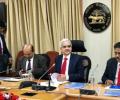
The fourth consecutive rate cut is expected to lower equated monthly instalments (EMIs) for home and auto buyers, and borrowing cost for corporate.
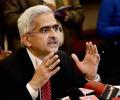
The uncertainty created by the jump in COVID-19 infections and localised lockdowns prompted RBI Governor Shaktikanta Das and other members of the rating setting panel MPC to unanimously vote for status quo in interest rates and an accommodative policy stance to support growth, as per minutes of the meeting released on Thursday. "The need of the hour is to effectively secure the economic recovery underway so that it becomes broad-based and durable," the Governor said during the three-day meeting of the Monetary Policy Committee (MPC) which ended on April 7. The renewed jump in COVID-19 infections in several parts of the country and the associated localised and regional lockdowns add uncertainty to the growth outlook, he observed, as per the minutes of the meeting released by the central bank.
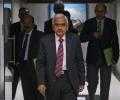
With the 115 bps reduction in repo rate beginning February, banks have already transmitted 72 bps to the customers on fresh loans and some large banks have transmitted as much as 85 basis points.

"Finance Ministry and RBI keep talking all the time," Rajan said.

Acharya was one of the youngest deputy governors in the central bank's history and was in charge of the critical monetary policy department which also made him a part of the rate-setting panel.

Central bank moves to infuse liquidity into bond market to help boost sentiment.
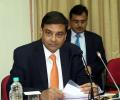
Relations between the Mint Road and North Block have often been frosty, with the former's calls for lowering rates being the biggest point of difference

Discussion paper fixes Rs 1,000 cr as minimum capital for these specialised banks

This is the fifth straight cut in rates by the Reserve Bank of India in as much policy reviews in 2019, and takes the total quantum of reductions to 1.35 per cent.

Seed and early-stage start-ups are high-risk businesses, rarely have collateral and only 1 in 10 of them makes it to becoming a viable company.

'As a person who has seen the treasure, I am worried about its safety.'

The finance ministry has ruled out the proposal for the appointment of a chief operating officer (COO) of the rank of deputy governor in the Reserve Bank of India (RBI), as the government feels no interim arrangements should be made for such high-profile appointments.

'Credit expansion is probably the quickest way to get the economy going again.' 'Easy credit is like a shot of nitro in a race car: In timely, small, quick, doses it can give a tremendous boost but carried to extreme it can destroy the engine,' points out S Muralidharan, former managing director, BNP Paribas.

The stage is set for the loading of cash into automated teller machines (ATMs) through the cassette-swap mode with an initial four-phased roll-out across 30 cities from June 1. The lockable cassette-swap will do away with the current practice of open-cash replenishment into ATMs. Cash-in-transit (CIT) firm personnel, tasked with loading cash into ATMs, will not have to touch it anymore. Cash-handling will be done by CITs at the cash centre, and the task of taking into account the amount of cash remaining from the last cassette-load will also be made simpler.
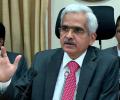
While efforts are being mounted on a war footing to arrest its spread, COVID-19 will impact economic activity in India directly through domestic lockdown. The second-round effects, it said, would operate through a severe slowdown in global trade and growth.
Reversal in the declining economic growth trajectory is clearly the need of the hour and all steps should be taken to bring about this change.
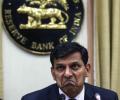
Will RBI chief have the final say, in the form of a veto

Top laggards in the Sensex pack included Kotak Bank, ICICI Bank, HDFC Bank, Tata Motors, L&T, SBI, Tata Steel and Axis Bank, falling up to 3.46 per cent.
The Reserve Bank on Wednesday said it plans to issue new bank licences around January, "consistent with the highest standards of transparency and diligence."
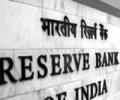
The government data released on May 17 showed a minor dip in headline inflation to 8.66 per cent in April, driven by a moderation in food and manufactured items prices.

The services sector growth in India fell to a one-year low in November on softer expansions in new work intakes and output, despite receding price pressures, a monthly survey said on Tuesday. The seasonally adjusted S&P Global India Services Business Activity Index fell from 58.4 in October to a one-year low of 56.9 in November. Despite witnessing a month-on-month decline, the rate of expansion was stronger than its long-run average.

India's prices are rising faster than many of its emerging market peers. The country's inflation print for May at 4.25 per cent is a marked reduction from the levels seen in May 2022 (7.04 per cent). However, even though the inflation rate remains within the Reserve Bank of India's medium-term target of 4 per cent, with a 2 per cent margin on either side, it continues to be higher than China, Russia, and Brazil.
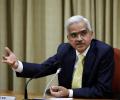
Reserve Bank Governor Shaktikanta Das on Wednesday said the country is at the doorstep of economic revival on the back of accommodative monetary and fiscal policies being pursued by the central bank and the government.

In its Fifth Bi-monthly Monetary Policy Statement, 2017-18, RBI said the second quarter growth was lower than the one that was projected in the October review, and the recent increase in oil prices may have a negative impact on margins of firms and Gross Value Added (GVA) growth.

The repo rate, at which the central bank lends to the system, will come down to 5.75 per cent after the cut.
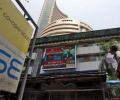
The stock markets, which had opened in the green on rate cut hopes, tumbled after the monetary policy announcement.

India's services sector activity eased in August but growth rates for new orders remain elevated, as services firms indicated the sharpest upturn in new export business which acted as a catalyst for firms to expand their workforces as well as output, a monthly survey said on Tuesday. Despite falling from 62.3 in July to 60.1 in August, the seasonally adjusted S&P Global India Services PMI Business Activity Index indicated one of the strongest increases in output seen since mid-2010. For the 25th straight month, the headline figure was above the neutral 50 threshold.
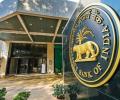
RBI in wait and watch mode as several risks to inflation continue to exist including a sudden reversal of food prices and oil price volatility.
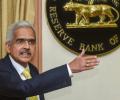
The board deliberated on the governance framework of the RBI and it was decided that the matter needs further examination
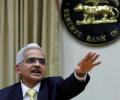
If the new governor can think out of the box even as he signals that he can bat for the RBI cadre and respect its institutional memory, that will go a long way in getting out of the current impasse.
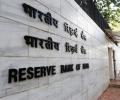
The central bank's next monetary policy review is scheduled for April 5. It had kept the policy rate unchanged in its February meeting on fears of inflation.

Believe it or not, the regulator is even stretching its arm to identify stressed borrowers and gauge the 'distance to default' as a measure of a particular bank's fragility, reveals Tamal Bandyopadhyay.
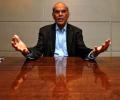
Subbarao said he would be "ok" if a sovereign bond issue in foreign currency is done once just to test the waters, but cautioned against using the instrument regularly.

The Financial Stability and Development Council meeting on Tuesday started with an air of tension in the room. An official present described the participants' body language as "tetchy". However, once presentations and discussions begun, the mood considerably eased.
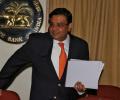
Fitch said the full implications of Patel's resignation will only become clearer once there is some indication of the RBI's policy approach under his replacement, Shaktikanta Das

In the Sensex pack, Hero MotoCorp, IndusInd Bank, Bajaj Auto, Maruti and M&M were the top gainers, spurting up to 2.66 per cent.
 © 2026 Rediff.com - Advertise with us - Disclaimer - Privacy Policy - Sitemap - Feedback - About us - Terms of use - Grievances